Adelaide & Kangaroo Island

Holidays in Adelaide and on Kangaroo Island
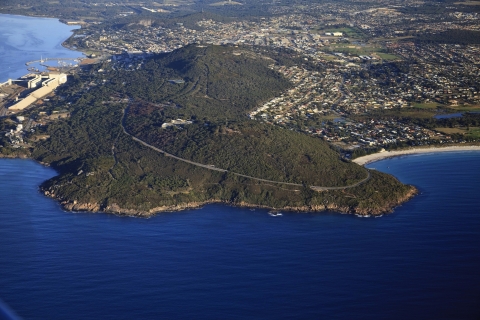
Adelaide has kept the atmosphere and style of a quiet, unhurried small town. Between its modern high-rises lie large parks and green spaces, which have earned the city the nickname ‘green capital’. ‘Green’ is the key word for the people of Adelaide: they usually leave the car at home and prefer to get around on foot or by bike. Locals and visitors alike can borrow bikes free of charge. Explore the city’s many museums by bike or browse the Central Market. In Port Adelaide, plenty of characterful pubs open their doors in nineteenth-century buildings. By day you can go kayaking on the Port River – and who knows, you might even spot a dolphin or two.
From Adelaide to Kangaroo Island
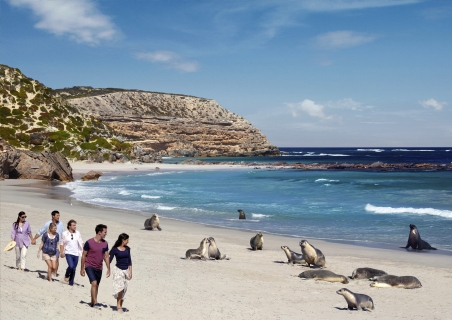
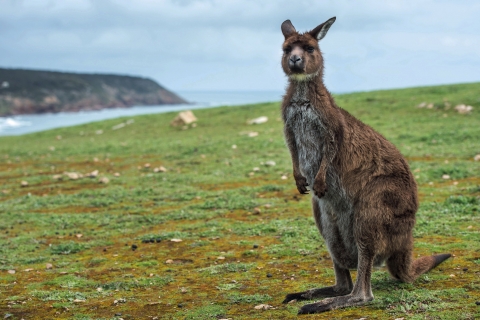
Adelaide is also the perfect starting point for discovering Kangaroo Island, with its glorious coastline and picturesque cliffs, or the famous Barossa Valley wine region.


Darwin – Adelaide Explorers Way
Straight through the heart of the continent!
The name says it all: on the Explorers Way, drivers follow in the footsteps of Australia’s first explorers – and become explorers themselves, discovering an enormous variety of landscapes. The route of more than 3300 km from Darwin to Adelaide leads through tropical forests and vineyards with a Mediterranean feel. And, of course, through the landscapes of the Outback. Have you heard of John McDouall Stuart? The first white man to cross the Red Centre, in 1862 – or does the Stuart Highway, which follows his route, at least ring a bell? Australians can only smile at the question. Everyone knows the legendary road that cuts right across the continent Down Under, even if few have actually driven it themselves. As foreign visitors evidently could not relate much to Mr Stuart, a few years ago the Stuart Highway was given a second name:
Explorers Way. That sounds far more adventurous straight away. And street name or not, the only people out here are long-distance drivers anyway. Driving for hundreds of kilometres without seeing a town or even a single house on the horizon – where in Europe could you do that? Even in the age of air-conditioned cars and sealed roads, the Explorers Way conveys a real sense of adventure. Across the vast, inhospitable regions, barren landscapes and salt lakes shape the route of around 3300 km. With such long distances between stages, you will need time and patience. Good to know: all in all, you should allow about two weeks for the Explorers Way. If you would like to stretch out the experience of the long distances even further, add Uluru or the Flinders Ranges to your itinerary. Just an hour or two after leaving Darwin, your plans may already start to waver. You could spend half a day in Litchfield National Park – or just as easily several days. The most impressive of its many waterfalls are Tolmer, Florence and Wangi Falls, which feed the most beautiful swimming holes in northern Australia. Darwin’s residents love coming here at weekends to swim and unwind. From short strolls to the Tabletop Walk of almost 40 km, there is something for every fitness level.
Litchfield and Kakadu top the rankings of national parks. To reach Kakadu, leave the Explorers Way at Pine Creek and follow the Nature’s Way. A four-wheel drive is required for this detour. It is no coincidence that Kakadu has been inscribed on the UNESCO World Heritage List twice: once as a natural wonder and once for its unique Aboriginal art. At Ubirr and Nourlangie Rock, barramundi swim through the rocks, hunters wield their spears, turtles paddle and kangaroos go hunting – all of it, of course, painted onto the rock. A boat trip on the Yellow Waters Billabong is every birdwatcher’s dream. Brolgas, jabirus and sea eagles are just three of the more than 200 bird species you can observe. A good pair of binoculars is worth its weight in gold! Jim Jim and Twin Falls are between 150 and 200 metres high and can be seen from far away. Back in Pine Creek, the two-lane sealed road takes you on to Katherine – don’t let the word ‘highway’ in Stuart Highway fool you. First activity: a boat trip or canoe tour through the unique Katherine Gorge, which actually consists of 13 gorges. Gliding past the sheer rock walls is impressive every time, especially in the evening, when the cliffs glow a brilliant red. Above the gorge, several walking trails lead to spectacular lookouts. If you want to go even higher and take in the whole gorge, simply book a helicopter flight. Along the way you will also see Edith Falls, which likewise lies within Nitmiluk National Park. Visit on foot and you have the advantage of being able to swim there. Fortunately, only the small, harmless freshwater crocodiles live here. Mataranka offers a rare treat – a natural thermal pool at 34 degrees beneath the trees, yet right in the middle of the Outback. The next two and a half hours of driving are rather monotonous. You will perk up again around Daly Waters. Off-road trucks, music and a child at the petrol station reveal that more than 16 people must live in this hamlet. In the outback pub, famous throughout the country, bras hang from the ceiling, the jukebox battles against the bawling of bearded, tattooed regulars, and the barmaids pull pint after pint. Only 14 h? Who cares. Money and occupation don’t seem to matter here. The next morning you head south with an earworm or two – more or less directly. After more than 400 km, Tennant Creek awaits with a wide choice of activities: gold-panning courses, history lessons at the old Telegraph Station, encounters with Aboriginal art, and shopping. 100 km south of Tennant Creek lie the Devils Marbles: huge, rounded granite boulders scattered across a wide, flat valley. They range from 50 centimetres to 6 metres in diameter.
There are two reasons to stop at the ‘Wycliffe Well Holiday Park’: firstly, you can fill up with diesel at a good price, and secondly, it offers one of the largest selections of beer in Australia. Over 55 varieties are served – more than anywhere else in the Northern Territory. Wycliffe Well is an oasis in the desert and Australia’s UFO-sighting capital. From here you continue to the ‘capital of the Red Centre’, Alice Springs. After four to five hours of pure driving time, reaching ‘The Alice’ is a joy. The town of 27,000 inhabitants not only marks the centre of the continent but is also one of the hubs of Aboriginal culture: nowhere else will you find so many galleries of Aboriginal art in such a small space. In Alice Springs you can hire a car and either take the Red Centre Way to the scenic highlights of Kings Canyon, Uluru and Kata Tjuta (see box), or continue south on the Explorers Way. Make a detour to Rainbow Valley, which can only be reached on a dirt road for the last few kilometres. Why the valley bears this name quickly becomes clear: the weathering of the iron-rich sandstone has created coloured bands of rock in shades ranging from white to deep red. The first stop worth mentioning in South Australia is the little town of Marla, with just 70 inhabitants. Many travellers like to spend the night here, not least because this is where the roads divide. For many, the crucial question arises: how should the journey continue? Further south on the Explorers Way via Coober Pedy, or east through the Painted Desert (see box ‘Oodnadatta Track’) and then via the Flinders Ranges to Adelaide? Those travelling by train from Darwin via Marla do not have this choice: the only rail link between Australia’s north and south coasts runs non-stop to Coober Pedy. Travelling north from Adelaide, the train does stop here. This happens twice a week, when ‘The Ghan’ interrupts its journey through four climate zones for two hours. In total, the legendary tourist train takes around 54 hours for the 2979 km route from Darwin to Adelaide. After all that desert, Coober Pedy, with around 1600 inhabitants, already counts as a small town. The ‘opal capital of the world’ is famous not only for its white gemstones but also for the underground homes, hotels and churches that residents have dug below ground to escape the merciless summer heat. The Desert Cave Hotel is the only underground four-star hotel in the world; almost half of its 50 suites lie beneath the surface.
If guests’ feedback is anything to go by, you sleep particularly well in these naturally cool rooms. For refreshment, there is the pool or an ice-cold cocktail at the underground bar. Tip: on the ‘Mail Run Tour’ you can spend a day crossing the desert with the postman aboard a huge 4x4 vehicle. While he delivers the mail to the remotest letterboxes, there is time to get to know each other. Once you are behind the wheel, don’t forget the ‘road trains’: up to 100 metres long, these trucks are without doubt the kings of the road. ‘A lot of nothing’ is what Australians call this bush landscape, which covers three quarters of the continent yet is home to only 0.3 % of the population. On the long route towards Port Augusta, lined with several salt lakes, the population density seems even lower. In Port Augusta, with its 14,000 inhabitants, civilisation hits you with full force. The view of the sea announces that the end of the journey is near. Anyone who refuses to accept this can escape to the Wadlata Outback Centre, which invites you on a journey back in time to the age of the dinosaurs – or simply point the GPS back towards the interior.
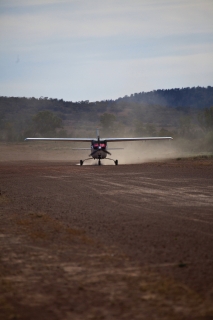
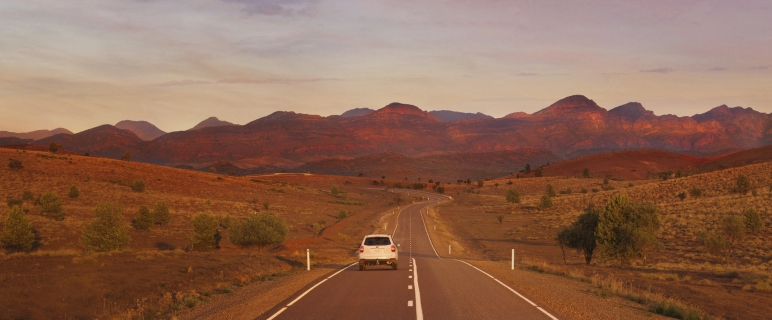
Even though Adelaide can be reached via the Explorers Way in three to four hours, you should still allow two to three days for the Flinders Ranges – and extra memory cards for your camera. With deep gorges and rugged rock formations, the 500 km mountain range offers endless new photo opportunities. The highlight of the three (!) national parks is Wilpena Pound, which resembles a giant amphitheatre of rock. The basin was formed by thousands of years of erosion, which gradually wore away the softer rock layers inside and left a rim of hard rock behind. Climb aboard a Cessna and marvel at this natural phenomenon from the air! Mountain bikers can enjoy more than 200 km of trails, and hikers will not be disappointed either. Some paths lead right up to the crater rim. Tip: the Yacca lookout offers a magnificent view – but there are many more. Bunyeroo Valley and the Parachilna and Brachina Gorges, where with a little luck you can spot the rare yellow-footed rock-wallabies, are further natural spectacles for anyone who cannot get enough.
The relaxed ‘Prairie Hotel’ is popular with film-makers and also known for its excellent cuisine. The little town of Blinman with its historic mine is another rewarding destination nearby. 150 km away, Arkaroola is home to the only observatory in the Outback as well as Sillers Lookout – the highlight of the Ridgetop Tour.
Final stage! Now things become pleasant, almost Mediterranean. The region is home to the Clare Valley, one of Australia’s oldest and finest wine regions (the Riesling region par excellence), as well as the no less famous Barossa Valley. This is where major wine producers such as Jacob's Creek, Penfolds, Peter Lehmann, Seppeltsfield and Yalumba are based, exporting Shiraz, Cabernet Sauvignon and Riesling on a grand scale. Their wineries offer guided tours of the vineyards, wine seminars and award-winning restaurants with fantastic views. Tastings at the small cellar doors undoubtedly have their charm too. If, after all the kilometres of the past few weeks, you no longer feel like getting back in the car, you will find the very best in the ‘Wined Bar’ of the National Wine Centre of Australia in the heart of Adelaide. Here you can choose from 120 great wines of the fifth continent – with information about each wine included free of charge. A fitting finale to a great adventure.
Travel tips
Types of travel
Our customers’ favourite tours in Adelaide & Kangaroo Island
FREE BROCHURE ORDER
YOUR TRAVEL SPECIALISTS FOR Adelaide & Kangaroo Island
 The travel agencies of the knecht reisen group





 Swiss long-haul travel specialist for over 60 years

