Swiss long-haul travel specialist for over 60 years
West Coast & Kimberley Region

Australia’s West Coast and the Kimberley Region
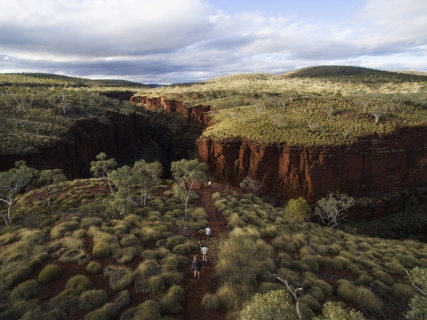
This region of extremes covers 423,000 km2, making it as large as Switzerland and Germany put together; it has no four seasons, only a dry season and a wet season. Take plenty of time if you want to cross these ancient landscapes by 4x4, ford rivers and learn more about the origins of the Aboriginal people. The unique scenery of Karijini National Park is the undisputed highlight of the Pilbara region. Besides its wild, vivid red beauty, a visit to this park is a real adventure: you hike through gorges, whizz down natural rock slides and relax in natural rock pools! What more could you want?
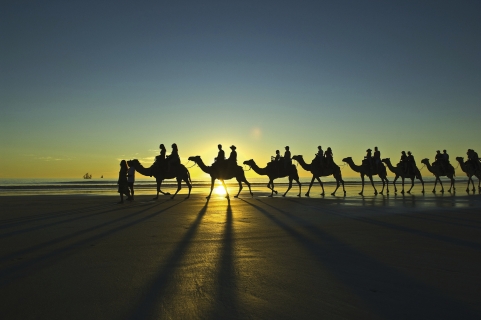
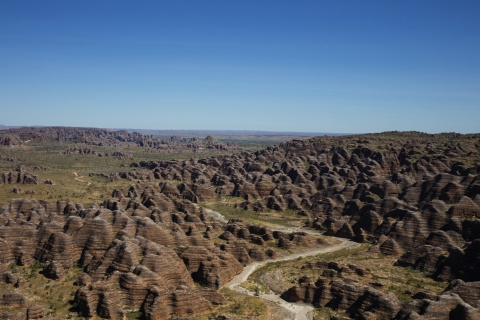
Broome, the pearl capital of Western Australia, owes the world’s most sought-after pearls to its crystal-clear waters. The little town is also famous for Cable Beach, a 22 km stretch of sand where you can go for a camel ride beneath spectacular sunsets. Around 200 km north of Broome, on the Dampier Peninsula up to Cape Leveque, wild white sandy beaches, turquoise waters and the imposing Pindan Cliffs await you. The Kimberley region in Australia’s north-west is one of the last unexplored wilderness areas on Earth. Drive the famous Gibb River Road with its 660 kilometres of tracks – a unique experience in a landscape full of deep gorges, rugged rock formations, picturesque waterfalls and green plains. Kununurra, the only small town in the east of the region, is the ideal base for excursions to the famous Bungle Bungle massif in Purnululu National Park, a UNESCO World Heritage Site. It was discovered just 30 years ago!
The Coral Coast and Nambung National Park
The Coral Coast is made up of 1,100 kilometres of glorious beaches, turquoise waters and an exotic, colourful underwater world – a true natural paradise! Nambung National Park, with its famous Pinnacles – thousands of limestone pillars rising up to four metres high – lies around two hours’ drive north of Perth. Another highlight of the region is ‘Nature’s Window’ in Kalbarri National Park, a natural rock arch with a superb view of the Murchison River as it winds along the floor of a gorge. Anyone visiting the Coral Coast should not miss Shark Bay, a UNESCO World Heritage Site. Its highlights are the famous Shell Beach, made up of billions of tiny shells, and the dolphins of Monkey Mia. Further north in Cape Range National Park, the Ningaloo Coast was also added to the UNESCO World Heritage list in 2011. It is one of the last marine paradises in the world, home to hundreds of species of tropical fish, colourful corals, humpback whales, sea turtles, rays and dugongs. The great star of the reef grows up to 16 metres long: the whale shark, the largest fish in the world. You can enjoy magical moments from March to July, when you swim with these gentle giants. The reef is accessible straight from the beach.
Our customers’ favourite tours on the West Coast & in the Kimberley Region
FREE BROCHURE ORDER
 The travel agencies of the knecht reisen group