New Zealand

Travel to New Zealand
The land of the long white cloud is home to impressive natural and cultural treasures: vast glaciers and lush green rainforests, mountains and volcanoes, rugged fjords and dream beaches, alpine plateaus with huge flocks of sheep and bubbling geysers.
A trip to New Zealand guarantees you a real break from hectic everyday life and unforgettable memories – in your photos and in your mind. New Zealand has an almost indescribable atmosphere: there is something magical about this country. New Zealand is famous for its Maori culture and its breathtaking landscapes, which you have surely already admired in films such as ‘The Lord of the Rings’ or ‘The Hobbit’. Experience it all up close on a trip with us!
Life in New Zealand
New Zealand was first discovered around 1,200 years ago by a people who arrived from French Polynesia in the canoes of the time. To this day, its people have retained their openness and hospitality. For economic reasons, over 85% of the population live in the big cities. New Zealand’s most populous cities are Auckland, Rotorua and Wellington on the North Island and Christchurch and Queenstown on the South Island.
Where to go in New Zealand?
One of the country’s most impressive sights is the town of Rotorua. Here you can observe geothermal activity in numerous places. As well as bubbling mud pools, geysers and hot springs, Rotorua is also known for its Maori culture, which is an integral part of everyday Kiwi life. A visit to a Maori tribe therefore belongs on the list of experiences for every trip to New Zealand.
The climate in New Zealand
New Zealand lies south-east of Australia between the Tasman Sea and the South Pacific Ocean and consists of two large main islands. It lies south of the Tropic of Capricorn in a temperate zone shaped by westerly winds. The result is a distinctly maritime climate with mild winters and summers that are not too hot. The South Island is 5 to 10°C cooler than the North Island. From July to September, snowy winters are guaranteed in most ski areas, while frost is rare at low altitudes. It can rain frequently at any time of year. If you are planning a tour of New Zealand, bear in mind that the seasons are exactly the opposite of ours. To make the most of your New Zealand adventure, we recommend that all travellers pack comfortable clothing, a rain jacket, warm jumpers and a torch. If you are visiting the South Island in winter, thermal underwear is a good idea.
New Zealand – the North Island
New Zealand’s North Island is the perfect place for every traveller. Whether you are looking for secluded beaches, are interested in the beginnings of New Zealand’s political history or in geothermal sulphur springs, or would like to learn more about Maori culture – the North Island offers all this and much more! The Bay of Islands, around four hours’ drive north of Auckland, is one of the North Island’s main attractions. It captivates with the turquoise water of its rugged bays and 150 untouched islands on the horizon. Tongariro National Park, with its many kilometres of hiking trails, also draws numerous visitors. Incidentally: the most popular hike is the Tongariro Crossing, which takes you through a variety of vegetation zones. Wellington is the capital of New Zealand and is also regarded as the country’s culinary capital. Its many delicatessens, cafés and restaurants delight every visitor. The surrounding wine regions are also well worth a detour.
New Zealand – the South Island
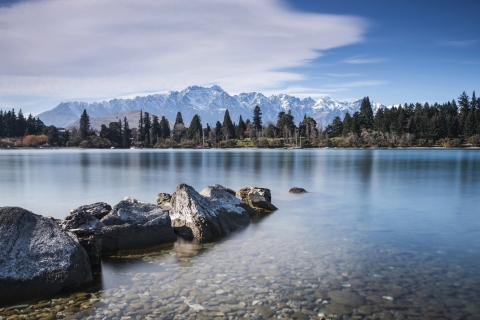
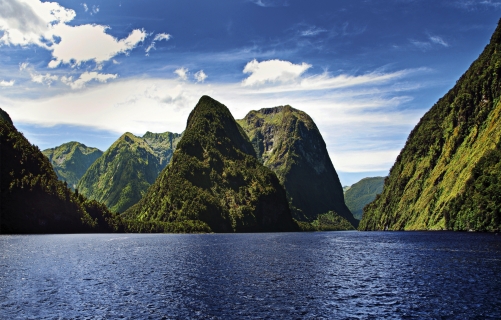
The landscapes of the South Island are undoubtedly among the most varied in the world. Travellers can relax on golden beaches, swim in turquoise water, go kayaking, explore fjords by boat, hike on glaciers, go for walks, climb in the high mountains or discover untouched islands. Abel Tasman National Park lies in the Nelson region, which is considered the sunniest in the country. The park surprises with secluded golden beaches, hiking trails and wonderfully turquoise water that invites you to swim and kayak. But do keep an eye out for seals and little blue penguins.
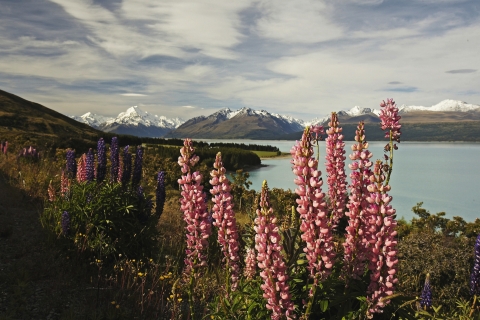
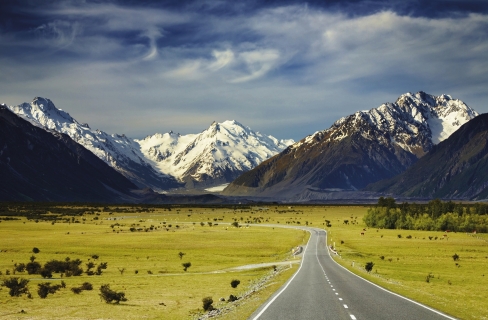
Mount Cook, known as Aoraki in Maori, is New Zealand’s highest mountain – its summit is usually covered in snow. Mount Cook can be seen from far away, even when its peak is shrouded in cloud. Another must on this island: the Marlborough Sounds. On the ferry crossing between the two islands, you can enjoy a magnificent view of this rare natural landscape. Thanks to their remoteness, the small islands of the Sounds are a place of complete tranquillity. They can only be reached by boat from Picton. The lovely accommodation and the peace and quiet will make you forget everyday life.
For wildlife watching, especially birdwatching, we recommend a detour to Stewart Island off the southern tip of the South Island. Hikes there range from easy day walks to more challenging three-day treks. Ulva Island, a small island just offshore, is home to a bird sanctuary where rare endemic birds live safe from their natural predators. You also have a good chance of seeing a kiwi in its natural habitat here. On the Otago Peninsula, you can watch other animals such as fur seals, sea lions, little blue penguins and yellow-eyed penguins.
Getting around New Zealand
During your stay in New Zealand, there are many different ways to get around. Discover New Zealand up close on numerous hiking and trekking routes. Whether you are a hiker, a family or a solo traveller – the specialist voyageplan offers you tailor-made tours of New Zealand.
Motorhome holidays are still one of the most popular ways to travel in New Zealand. A trip by motorhome or hire car is particularly suitable for families with children and for anyone who likes to travel independently yet with a certain level of comfort. Our travel guides give you a wonderful insight into the country and its culture. Let our specialists advise you.
How long is the flight to New Zealand?
The flight from Switzerland to New Zealand takes between 25 and 30 hours. A stopover breaks up the long journey a little. Depending on the airline, you will have one or two stopovers in cities such as Dubai, Singapore, Hong Kong or in Australia. If you would rather not travel the whole way in one go, you can plan a short stay in one of these cities.
How long should you stay in New Zealand to really enjoy your trip?
New Zealand is roughly the same size as Great Britain. As the flight from Europe to New Zealand is quite long, we recommend a stay of at least two to three weeks. It can be extended as you wish and also combined with Australia or the South Pacific.
Are there any venomous animals in New Zealand?
There are no venomous animals in New Zealand. However, do protect yourself from the sun and, when camping, from mosquitoes. As in Australia, UV radiation in New Zealand is very high.
Travel tips
Types of travel
Our customers’ favourite New Zealand trips

 The travel agencies of the knecht reisen group





 Swiss long-haul travel specialist for over 50 years

